- Define the question
- Define the ideal data set
- Determine what data you can access
- Obtain the data
- Clean the data
- Exploratory data analysis
- Statistical prediction/modeling
- Interpret results
- Challenge results
- Synthesize/write up results
- Create reproducible code
Structure of a Data Analysis
Part 1
Roger D. Peng, Associate Professor of Biostatistics
Johns Hopkins Bloomberg School of Public Health
Steps in a data analysis
Steps in a data analysis
Define the question Define the ideal data set Determine what data you can access Obtain the data Clean the data - Exploratory data analysis
- Statistical prediction/modeling
- Interpret results
- Challenge results
- Synthesize/write up results
- Create reproducible code
The key challenge in data analysis
"Ask yourselves, what problem have you solved, ever, that was worth solving, where you knew all of the given information in advance? Where you didn’t have a surplus of information and have to filter it out, or you had insufficient information and have to go find some?"

Defining a question
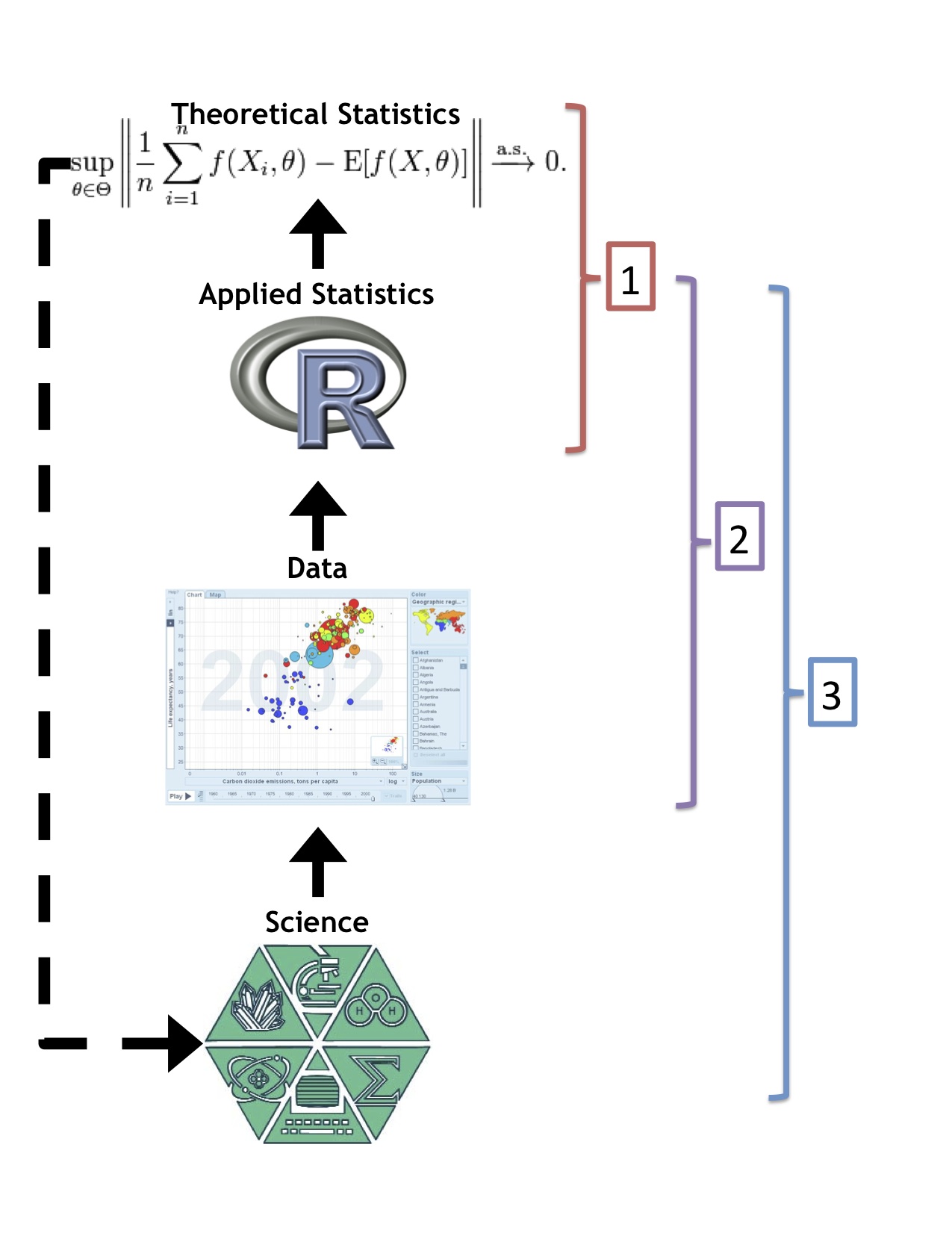
- Statistical methods development
- Danger zone!!!
- Proper data analysis
An example
Start with a general question
Can I automatically detect emails that are SPAM that are not?
Make it concrete
Can I use quantitative characteristics of the emails to classify them as SPAM/HAM?
Define the ideal data set
- The data set may depend on your goal
- Descriptive - a whole population
- Exploratory - a random sample with many variables measured
- Inferential - the right population, randomly sampled
- Predictive - a training and test data set from the same population
- Causal - data from a randomized study
- Mechanistic - data about all components of the system
Our example

Determine what data you can access
- Sometimes you can find data free on the web
- Other times you may need to buy the data
- Be sure to respect the terms of use
- If the data don't exist, you may need to generate it yourself
Back to our example
A possible solution
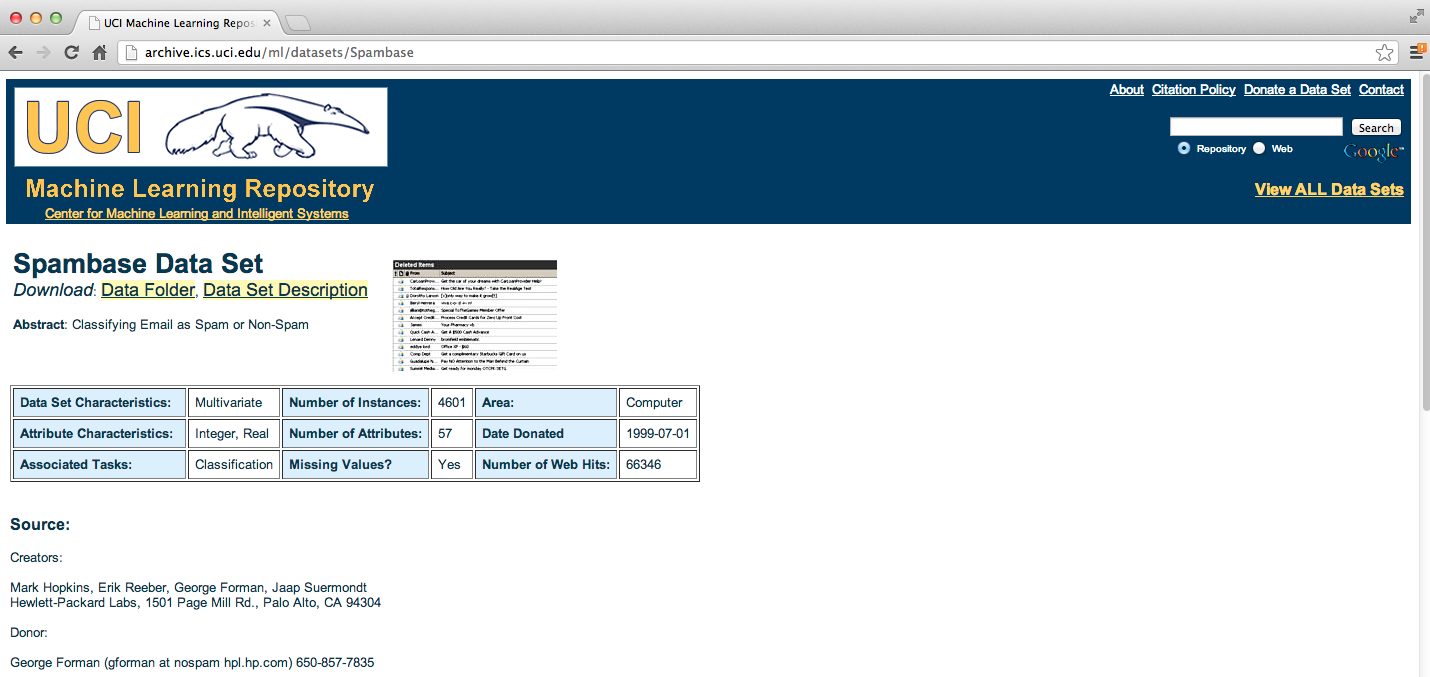
Obtain the data
- Try to obtain the raw data
- Be sure to reference the source
- Polite emails go a long way
- If you will load the data from an internet source, record the url and time accessed
Our data set

Clean the data
- Raw data often needs to be processed
- If it is pre-processed, make sure you understand how
- Understand the source of the data (census, sample, convenience sample, etc.)
- May need reformating, subsampling - record these steps
- Determine if the data are good enough - if not, quit or change data
Our cleaned data set
# If it isn't installed, install the kernlab package with install.packages()
library(kernlab)
data(spam)
str(spam[, 1:5])
'data.frame':   4601 obs. of  5 variables:
 $ make   : num  0 0.21 0.06 0 0 0 0 0 0.15 0.06 ...
 $ address: num  0.64 0.28 0 0 0 0 0 0 0 0.12 ...
 $ all    : num  0.64 0.5 0.71 0 0 0 0 0 0.46 0.77 ...
 $ num3d  : num  0 0 0 0 0 0 0 0 0 0 ...
 $ our    : num  0.32 0.14 1.23 0.63 0.63 1.85 1.92 1.88 0.61 0.19 ...